How to Log In to Bitstamp: Your Ultimate Guide to Trading, Sending Crypto, and More
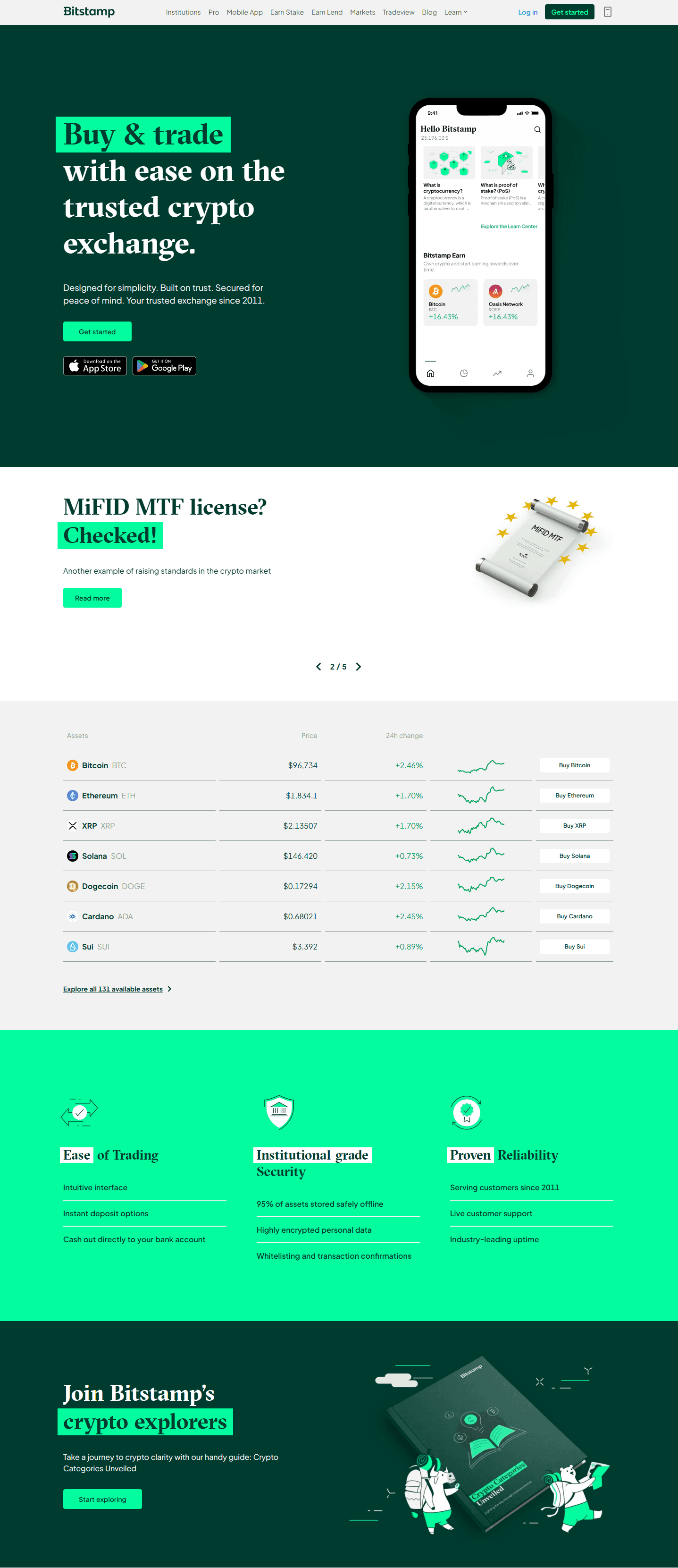
Bitstamp is one of the oldest and most trusted cryptocurrency exchanges in the world, offering a secure platform for buying, selling, and managing digital assets. Whether you're a beginner dipping your toes into crypto or an experienced trader looking for reliable tools, understanding the Bitstamp login process is the first step to unlocking features like real-time trading, sending and receiving cryptocurrencies, setting price alerts, and exploring advanced analytics. In this comprehensive guide, we'll walk you through everything you need to know about accessing your Bitstamp account safely and efficiently. By the end, you'll feel confident navigating the platform to make the most of your crypto journey.
Founded in 2011, Bitstamp has built a reputation for reliability, with a focus on security and user-friendly interfaces. It's regulated in multiple jurisdictions, which adds an extra layer of trust for users worldwide. Logging in isn't just about entering credentials—it's your gateway to a suite of tools designed for seamless crypto management. Let's dive into the details.
Getting Started: Creating Your Bitstamp Account
Before you can log in, you need an account. If you're new to Bitstamp, the registration process is straightforward and takes only a few minutes. Head to the official Bitstamp website or download their mobile app from your device's app store. On the homepage, you'll find a prominent "Register" button. Clicking it will prompt you to enter basic information like your email address, full name, and a strong password.
Bitstamp emphasizes security from the outset, so choose a password that's at least 12 characters long, mixing uppercase and lowercase letters, numbers, and symbols. Avoid using easily guessable details like your birthday or common words. Once submitted, you'll receive a verification email. Click the link inside to confirm your email address—this step is crucial to prevent unauthorized access.
After email verification, Bitstamp requires identity verification to comply with Know Your Customer (KYC) regulations. This involves uploading a government-issued ID, such as a passport or driver's license, and possibly a selfie for facial recognition. Depending on your location, you might also need to provide proof of address, like a utility bill. The verification process can take anywhere from a few hours to a couple of days, but once approved, your account is ready for full functionality.
Why go through this? It's not just bureaucracy; verified accounts unlock higher deposit and withdrawal limits, essential for serious trading. Plus, it protects the platform from fraud, ensuring a safer environment for everyone. If you're in a hurry, Bitstamp offers a basic account option with limited features, but for trading, sending crypto, or setting alerts, full verification is a must.
Step-by-Step Guide to Bitstamp Login
Now that your account is set up, logging in is simple. Start by visiting the Bitstamp website or opening the app. Look for the "Log In" button in the top right corner. You'll be asked for your email address and password. Enter them carefully—Bitstamp is case-sensitive, so double-check for typos.
If you've enabled two-factor authentication (2FA), which we'll cover next, you'll need to input a six-digit code from your authenticator app. Once everything matches, you'll be directed to your dashboard. Here, you'll see an overview of your portfolio, current market prices, and quick links to trading pairs.
For mobile users, the login process is identical, but with added convenience like biometric options. If your device supports fingerprint or face ID, you can link it during setup for faster access. Remember, always log in from trusted devices and networks. Public Wi-Fi can be risky, so use a VPN if you're accessing Bitstamp on the go.
One pro tip: Bookmark the official Bitstamp login page to avoid phishing sites. Scammers often create fake pages that look identical, tricking users into entering credentials. Always verify the URL starts with "https://www.bitstamp.net" and look for the padlock icon in your browser.
Enhancing Security with Two-Factor Authentication
Security is paramount in the crypto world, and Bitstamp makes it easy to add an extra layer with 2FA. If you haven't set it up during registration, do so immediately after your first login. Navigate to the "Settings" tab in your account, then select "Security." From there, choose "Enable Two-Factor Authentication."
Bitstamp supports authenticator apps like Google Authenticator or Authy. Scan the QR code provided, and the app will generate time-sensitive codes. Each login attempt will require one of these codes, making it nearly impossible for hackers to access your account even if they have your password.
Why is 2FA so important? Crypto exchanges are prime targets for cyberattacks. In 2015, Bitstamp itself faced a hack, but they've since implemented robust measures, including cold storage for funds and regular audits. Enabling 2FA reduces your risk significantly. If you lose access to your authenticator, Bitstamp provides backup codes during setup—store them securely offline.
Additionally, Bitstamp offers API keys for advanced users, but secure them with 2FA as well. For those handling large volumes, consider hardware wallets integrated with Bitstamp for even better protection.
Exploring Trading Features After Login
Once logged in, trading is at your fingertips. Bitstamp supports a wide range of cryptocurrencies, including Bitcoin (BTC), Ethereum (ETH), Ripple (XRP), and stablecoins like USDT. The trading interface is intuitive, with real-time charts powered by TradingView integration.
To place a trade, go to the "Trade" section. Select your pair, such as BTC/USD, and choose between market, limit, or stop orders. Market orders execute instantly at the current price, ideal for quick trades. Limit orders let you set a specific price, waiting for the market to hit it. Stop orders act as safety nets, triggering buys or sells when prices reach certain thresholds.
Bitstamp's low fees—starting at 0.5% and decreasing with volume—make it competitive. You can also stake certain assets directly on the platform for passive income. For beginners, the "Buy/Sell" widget simplifies purchases with fiat currencies like USD or EUR via bank transfers or credit cards.
Advanced traders appreciate the depth charts, order books, and historical data. Set up custom views to monitor multiple pairs simultaneously. Trading on Bitstamp isn't just about profits; it's about informed decisions, backed by tools like price history and volume indicators.
Sending and Receiving Cryptocurrencies Seamlessly
Bitstamp excels in facilitating crypto transfers. After login, head to the "Wallet" or "Deposit/Withdraw" section. To receive crypto, generate a wallet address for the specific coin. For example, for Bitcoin, you'll get a unique BTC address. Share this with senders, but always double-check for accuracy—one wrong character could mean lost funds.
Deposits are free for most cryptos, though blockchain network fees apply. Once confirmed on the network (which varies by coin—Bitcoin might take 10-60 minutes), funds appear in your balance. From there, you can trade or hold.
Sending crypto is equally straightforward. Enter the recipient's address, amount, and confirm with 2FA if enabled. Bitstamp adds a memo field for coins like XRP, which is required for some exchanges. Withdrawals might incur small fees, but they're transparent and competitive.
For fiat withdrawals, link your bank account during verification. SEPA transfers in Europe are fast and cheap, while international wires take longer. Always review limits based on your verification level—basic accounts have lower caps.
This feature is perfect for users who want to move assets between wallets, pay for services, or consolidate holdings. Bitstamp's integration with hardware wallets like Ledger enhances security for large transfers.
Setting Up Price Alerts for Smart Trading
Price volatility is crypto's hallmark, but Bitstamp's price alerts keep you ahead. After logging in, go to the "Alerts" or "Notifications" settings. You can set alerts for specific price levels, percentage changes, or volume spikes.
For instance, alert when Bitcoin drops below $50,000 or rises 5% in a day. Choose notifications via email, SMS, or in-app push. This is invaluable for traders who can't monitor markets 24/7. Set multiple alerts per asset, and customize them—perhaps one for buy signals and another for sells.
Bitstamp also offers market news feeds and API access for automated alerts in custom scripts. For passive users, alerts help decide when to send or receive crypto without constant checking.
Combining alerts with trading tools creates a powerful strategy. Imagine getting notified of a dip, logging in quickly, and executing a buy—all from your phone.
Troubleshooting Common Login Issues
Even with a smooth process, issues can arise. Forgotten password? Use the "Forgot Password" link to reset via email. Ensure your email is accessible and check spam folders.
If 2FA codes fail, verify your device's time sync—authenticators rely on accurate clocks. Lost your phone? Use backup codes or contact support with verification details.
Account locked after failed attempts? Wait 15 minutes or contact Bitstamp's 24/7 support. They're responsive via live chat or email, often resolving issues quickly.
Browser problems? Clear cache, update your browser, or try incognito mode. For app issues, reinstall or check for updates. Always report suspicious activity immediately—Bitstamp has fraud detection teams.
Mobile App: Login and Features on the Go
Bitstamp's mobile app brings desktop features to your pocket. Download from Google Play or App Store, then log in with your credentials and 2FA. The app supports biometrics for instant access.
Trade, send/receive, and set alerts directly from the app. Push notifications ensure you never miss an alert. The interface is optimized for touch, with swipe gestures for quick actions.
For travelers, the app's offline mode lets you view balances, though transactions require internet. It's secure, with device-specific encryption.
Advanced Tips and Best Practices
To maximize Bitstamp, explore sub-accounts for organizing funds or API for bots. Regularly review transaction history for anomalies.
Stay educated: Bitstamp's blog covers market trends, helping inform your trades. Diversify assets to mitigate risks.
Remember, crypto involves risks—only invest what you can afford to lose. Use alerts wisely to avoid emotional decisions.
Conclusion: Empower Your Crypto Experience with Bitstamp
Mastering the Bitstamp login opens doors to a world of crypto possibilities. From secure trading and effortless transfers to timely alerts, the platform caters to all levels. Prioritize security, stay informed, and enjoy the ride. Whether you're sending Bitcoin to a friend or trading altcoins, Bitstamp makes it user-friendly and reliable. Start today and take control of your digital assets.